Not all roofs are created equal, especially when it comes to commercial buildings. If you’ve been comparing flat roof vs. low-slope roof options, you’re not alone. It’s one of the most common questions property owners ask their commercial roofing contractor. Both look similar at first glance, but they have key differences that affect materials, drainage, and long-term performance. Let’s break it all down.
Flat Roof vs. Low-Slope Roof – They’re Not the Same
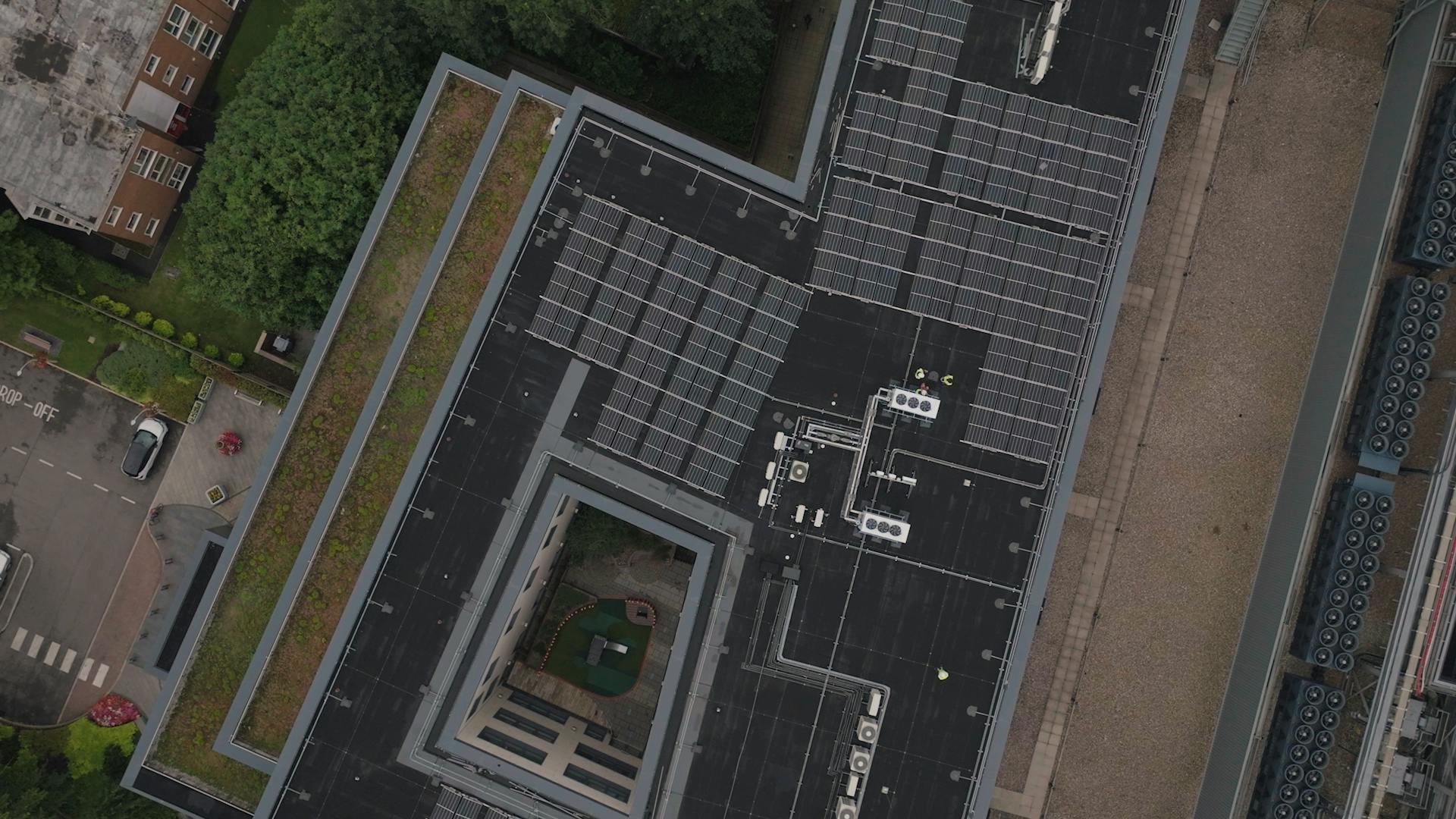
Here’s the thing – a truly flat roof doesn’t really exist in practice. Every roof needs at least a slight pitch to allow water to drain. What most people call a “flat roof” actually has a very minimal slope, typically less than 2:12 (meaning it rises less than 2 inches for every 12 inches of horizontal length). If water just sat there with zero movement, you’d have constant pooling and leaks in no time.
A low-slope roof, on the other hand, sits in the range of 2:12 to 4:12. It’s steeper than a “flat” roof but still much lower than the pitched roofs you see on most homes. Both types are popular in commercial roofing because they maximize usable space, lower construction costs, and allow for easy HVAC and equipment installation. But how they’re built and what they need is a different story.
Drainage Is Where the Real Differences Show Up
Drainage is the biggest practical difference between these two roof types. Because flat roofs (those with a pitch under 2:12) have almost no slope, water moves slowly. That means your drainage system has to work harder. Interior drains, scuppers, and tapered insulation systems are commonly used to push water off the roof before it causes damage. Without proper drainage design, you’re looking at ponding water, and that leads to roof repairs faster than almost anything else.
Low-slope roofs have a bit of an advantage here. Their extra pitch means water moves more naturally toward the edges or drains. That reduces the risk of standing water and gives you more flexibility in how you design the drainage layout. It’s a small difference in angle, but over years of rain, wind, and weather, it makes a big impact on how well the roof holds up.
Your Commercial Roofing System Determines the Best Fit
The roof type you choose directly affects what materials and systems make sense for your building. In commercial roofing, both flat and low-slope roofs work with a wide range of systems, but some materials are better suited to one or the other.
A good commercial roofer will assess your building’s slope first and then recommend the right product for your situation. Here are some of the most common commercial roofing systems used across both roof types:
- TPO (Thermoplastic Polyolefin) – A top choice for both flat and low-slope roofs. A skilled TPO installer can provide energy-efficient, heat-welded seams that resist leaks and UV damage.
- Metal roofing – Often used on low-slope roofs, metal roofing is incredibly durable, long-lasting, and low-maintenance. It handles water runoff especially well, thanks to its rigid panels.
- Roof coatings – Applied over existing roof surfaces to extend life and add waterproofing. A silicone roof coating is particularly effective on flat roofs where ponding water is a concern.
- Modified bitumen and EPDM – These membrane systems are common on low-slope and flat roofs alike, offering solid waterproof protection at competitive price points.
Maintenance Needs Are Different for Each Roof Type
When it comes to ongoing upkeep, flat roofs tend to demand more attention. Because of the minimal pitch, debris like leaves, dirt, and standing water can accumulate quickly. Regular inspections are critical, ideally twice a year and after major storms. Roof repairs on flat commercial roofs often center around seam failures, punctures, and drainage clogs.
Low-slope roofs are a little more forgiving. The slight pitch helps shed debris and water more efficiently, which reduces how often you’ll need emergency repairs. That said, they still need routine checks and maintenance. Applying a quality silicone roof coating every few years can dramatically extend the life of a low-slope roof and reduce the need for frequent repairs.
Cost Is Another Factor Worth Understanding Upfront
In terms of upfront roof installation costs, flat roofs are typically cheaper to build. There’s less material needed, the construction process is simpler, and labor costs tend to be lower. That’s part of why they’re so popular in commercial construction, because you get a lot of usable roof space for a relatively low investment.
However, the lifetime cost picture is a bit more nuanced. Flat roofs may cost less upfront, but they often need more frequent repairs and maintenance over time. Low-slope roofs cost a bit more to install but can be more cost-effective over the long haul due to their better drainage and reduced maintenance demands. The right choice depends on your budget, building type, and how long you plan to own the property. A qualified commercial roofer can run the numbers for your specific situation.
Knowing This Helps You Make Smarter Roofing Decisions
Understanding the difference between flat and low-slope roofs puts you in a much stronger position when it’s time to make decisions. Whether you’re building new, re-roofing, or just trying to figure out what kind of roof you already have, this knowledge matters. It affects everything from what materials are appropriate to how your warranty works to how much maintenance you should budget for each year.
The bottom line is this – both roof types can perform excellently when they’re designed, installed, and maintained correctly. The key is working with a roofing contractor who understands the unique demands of each system and can guide you toward the best solution for your building. Don’t make this decision based on price alone. Consider slope, drainage, material compatibility, and long-term performance. That’s how you get a roof that actually lasts.
Ready to Make the Right Call on Your Roof
Whether you’re dealing with a flat roof that’s seen better days or a low-slope system in need of attention, the right roofing partner makes all the difference. From TPO installation and metal roofing to roof coatings and targeted roof repairs, working with an experienced team means fewer surprises and better results. If you’re in the Atlanta area, our team is ready to help you figure out exactly what your commercial roof needs.
Don’t wait for a small issue to become a major expense. Contact Advanced Roofing & Paving today for a professional inspection and free estimate. Atlanta’s commercial properties deserve roofing that holds up, and we’re here to make sure yours does.