
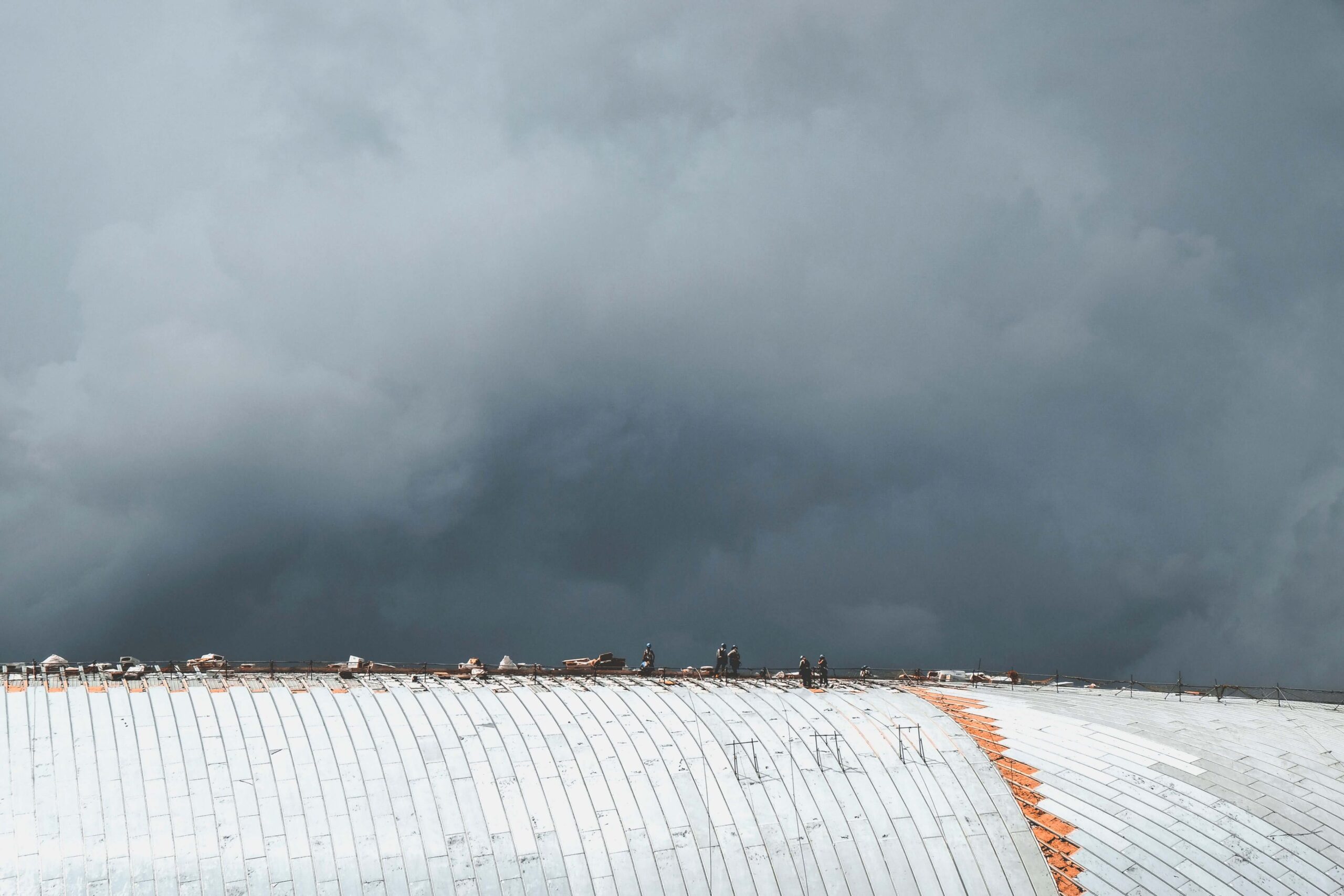
How to prepare your commercial roof for hurricane and storm season is a question every Atlanta property owner should address before severe weather arrives. Storm season doesn’t wait for you to be ready, and commercial roofing systems face serious threats from high winds, heavy rain, and hail every year.
Even a small roofing vulnerability can quickly turn into a major emergency when severe weather strikes. The good news is that with proper planning, inspections, and maintenance, much of this damage can be prevented. Here’s how to make sure your commercial roof is ready before the skies turn ugly.
Your Pre-Storm Inspection Is the Most Important Step
Before storm season kicks in, getting a professional roof inspection should be at the top of your to-do list. A trained commercial roofer knows exactly where to look – flashings, seams, drains, edge details, penetrations, all the spots that tend to fail first under storm stress. What looks fine from ground level can tell a very different story up close.
Think of a pre-storm inspection as a stress test for your roof. The inspector is essentially asking: if six inches of rain fell tonight and winds hit 60 miles per hour, what would give first? Once you have that answer, you can prioritize repairs before the season starts. It’s much wiser than scrambling for emergency help when every roofing contractor in Atlanta is slammed with storm calls.
Flashings and Seams Are Where Storm Damage Usually Starts
If there’s one area that deserves extra attention before storm season, it’s your roof’s flashings and seams. Flashings are the metal pieces that seal transitions where the roof meets a wall, a parapet, an HVAC unit, or a vent. They’re critical to keeping water out, and they’re also the most vulnerable to wind uplift and water intrusion.
Seams on single-ply membranes like TPO are equally critical. These factory-welded or adhesive-bonded joints are strong when properly installed, but they can begin to separate over time, especially after repeated heat and UV exposure. A seam that’s starting to lift might hold on through a normal rain but fail completely when a storm puts real pressure on it. Checking and re-bonding any questionable seams before the season starts is a straightforward roof repair that pays off big when the weather rolls in.
Commercial Roofing Systems Need Storm-Specific Attention
Not all commercial roofing systems face the same storm risks. Knowing what your specific system is vulnerable to helps you and your roofing contractor focus prep efforts in the right places. A targeted approach is smarter than a generic checklist, and it means nothing important gets missed before the season starts. Here’s what storm prep looks like across different roofing systems:
- TPO and single-ply membranes: Inspect all seams and perimeter edges for lifting or separation; ensure membrane is fully adhered and perimeter securement is intact.
- Metal roofing: Check all fasteners and panel seams for corrosion or loosening; high winds can get under panels and cause major uplift if fasteners are compromised.
- Built-Up Roofing (BUR): Look for blistering or gravel displacement, which can expose the underlying membrane to wind-driven rain.
- Modified Bitumen: Inspect lap seams and flashings carefully – these are the most common failure points under storm pressure.
- Roof coatings: If your roof has a silicone roof coating or other protective coating, check for thin spots, cracking, or areas where adhesion has weakened that could allow water infiltration.
Drainage Is Your Roof’s First Line of Defense
One of the most overlooked storm prep tasks is making sure your roof drainage is completely clear and functional. Flat and low-slope commercial roofs depend entirely on drains, scuppers, and gutters to move water off the surface. When those are clogged with leaves, debris, or sediment, water ponds, and ponding water during a heavy storm adds significant weight to the roof and dramatically increases leak risk.
Before storm season, every drain and scupper on your roof should be cleared and tested. Walk the roof after a light rain to see if water is flowing properly or sitting in low spots. If you’re finding areas where water consistently ponds, that’s a drainage design issue worth addressing before a major storm makes it worse.
A Roof Coating Before Storm Season Is a Smart Move
If your roof is due for a coating refresh, doing it before storm season is ideal timing. Roof coatings create a seamless, waterproof surface that gives your existing membrane an extra layer of protection against wind-driven rain and standing water. They also seal minor surface cracks and worn spots that could become entry points for water during a storm.
A silicone roof coating is especially well-suited for storm prep because it doesn’t erode or break down under standing water the way some other coatings do. Even if your drains back up temporarily during an intense storm and water sits on the roof for hours, a silicone coating holds its seal.
Have a Post-Storm Plan Before You Actually Need One
Preparation doesn’t stop at pre-season work – it also means knowing what to do right after a storm passes. Have your roofing contractor’s contact information easy to find, and plan to schedule a post-storm inspection as quickly as possible. Damage that gets addressed within days of a storm is almost always less expensive to fix than damage that sits for weeks while water continues to work its way through the system.
It also helps to do a basic visual check from the ground immediately after a storm – look for obvious signs like displaced materials, visible membrane tears, or debris on the roof that could cause damage if left. Document anything that looks off with photos and report it to your contractor. This kind of documentation is valuable not just for repairs but also for insurance claims.
The Best Storm Protection Starts Long Before the Storm Does
Storm season is predictable even when the storms themselves aren’t. That means there’s always time to prepare if you start before the first system rolls in. For commercial property owners in Atlanta, getting your roof inspected, repaired, and protected before hurricane and storm season is one of the highest-value things you can do for your building.
Don’t let storm season catch you off guard. Contact Advanced Roofing & Paving today to schedule your pre-storm roof inspection and find out if repairs or a protective coating are the right next step for your building. Our team works with commercial property owners across Atlanta to keep roofs storm-ready year after year.