For commercial property owners and facility managers in Atlanta, choosing the right roofing material is crucial for durability, energy efficiency, and long-term cost savings. Two of the most popular options for flat or low-slope commercial roofs are EPDM (Ethylene Propylene Diene Monomer) and TPO (Thermoplastic Polyolefin). Both are single-ply roofing systems, but they differ in composition, performance, and maintenance requirements. Understanding which is better – EPDM or TPO and learning their differences can help you make a smarter investment for your building.
EPDM Roofing Overview
EPDM is a synthetic rubber membrane that has been widely used for commercial roofing for decades. It is highly flexible and resilient, making it ideal for roofs that undergo thermal expansion and contraction. EPDM is particularly resistant to weathering, UV rays, and chemical exposure. Its longevity, combined with relatively straightforward repair procedures, makes it a reliable option for low-slope commercial roofs. Key benefits of EPDM roofing include:
- Excellent flexibility that accommodates building movement
- Strong resistance to water and moisture intrusion
- Lower upfront costs compared to some other commercial systems
- Proven track record of long-term durability with proper maintenance
EPDM is typically installed in either fully adhered, mechanically attached, or ballasted systems, and it can last 20–30 years depending on climate, roof exposure, and maintenance practices.
TPO Roofing Overview
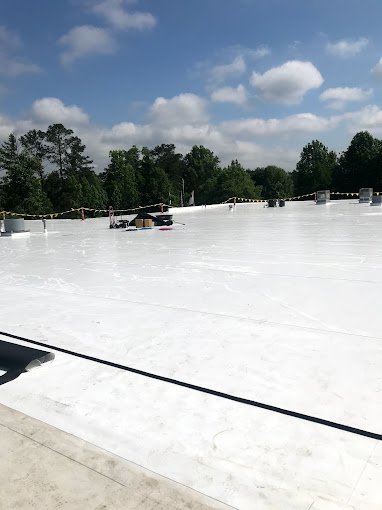
TPO is a single-ply thermoplastic membrane that has gained popularity in recent years, especially for energy-conscious commercial buildings. TPO is highly reflective, which reduces rooftop heat absorption and lowers cooling costs—an advantage for commercial properties in Atlanta’s hot summers. The material is durable, resistant to UV rays, chemical exposure, and punctures, and its heat-welded seams provide strong leak protection. Key benefits of TPO roofing include:
- High energy efficiency due to reflective surface
- Strong durability against punctures and UV degradation
- Seamless heat-welded connections for improved leak resistance
- Long lifespan of 15–30 years when properly installed
TPO can be fully adhered, mechanically attached, or ballasted, similar to EPDM, but its reflective surface often makes it the preferred choice for property owners seeking energy savings.
Comparing EPDM and TPO
While both EPDM and TPO are designed for flat or low-slope commercial roofs, they differ in a few key areas:
1.Energy Efficiency
TPO has a clear advantage in energy savings due to its reflective white surface, which reduces heat gain and lowers cooling costs. EPDM, particularly in black, absorbs heat and may increase HVAC demand, though white or reflective EPDM options are available.
- Durability and Maintenance
EPDM is known for flexibility and long-term waterproofing. Its seams are typically glued or taped, which can be easier to repair than TPO’s heat-welded seams in some cases. TPO, however, offers strong seam integrity and resistance to punctures, making it slightly more robust under high-traffic conditions. - Cost Considerations
EPDM generally has a lower upfront material cost, but TPO’s energy-saving properties may offset initial expenses over time. Maintenance and repair requirements should also be considered when calculating total lifetime costs. - Climate Suitability
For hot climates like Atlanta, TPO’s reflective properties make it more effective at reducing roof temperatures and protecting the building envelope. EPDM is highly resilient in a wide range of temperatures, but standard black EPDM may lead to higher cooling costs unless reflective coatings are applied.
Installation Differences
EPDM installation is relatively straightforward, involving adhesive, mechanical fastening, or ballast to hold the membrane in place. Its simplicity allows for easier repairs and maintenance over the roof’s lifespan. TPO installation requires heat welding of seams, which creates a stronger bond and reduces leak potential, but requires professional expertise and specialized equipment to ensure proper performance. Choosing a qualified commercial roofing contractor is essential for either system.
When to Choose EPDM
EPDM is an excellent choice if you are seeking:
- Lower initial installation costs
- A flexible roofing material that accommodates building movement
- Easy, cost-effective repairs
- Proven performance on long-term waterproofing
EPDM is ideal for commercial properties where budget is a primary concern and energy efficiency is less critical, or when a reflective coating can be applied to mitigate heat absorption.
When to Choose TPO
TPO is the preferred solution if you prioritize:
- Energy efficiency and lower cooling costs
- High durability with puncture and UV resistance
- Strong seam performance to prevent leaks
- Long-term savings through energy efficiency and reduced maintenance
TPO is especially suitable for large commercial buildings with flat roofs exposed to intense sun, rooftop equipment, or high-traffic areas.
Maintenance and Longevity
Both EPDM and TPO require regular inspections to maintain performance. Key maintenance practices include checking seams and flashing, clearing debris, ensuring drains are functional, and repairing any damage promptly. With proper installation and maintenance, both systems can last 20–30 years, although TPO may provide slightly better performance in reflective and UV-heavy applications.
Contact Advanced Roofing & Paving
Both EPDM and TPO offer strong performance for low-slope commercial roofing, but the right choice depends on your building’s priorities. EPDM is cost-effective, flexible, and easy to repair, making it suitable for budget-conscious projects. TPO provides superior energy efficiency, reflective properties, and seam durability, which is ideal for hot climates like Atlanta and buildings where long-term energy savings are important.
For commercial property owners in Atlanta, Advanced Roofing & Paving provides professional roofing services tailored to your needs. Our team specializes in:
- EPDM and TPO roof installation and repair
- Roof inspections, preventative maintenance, and restoration
- Roof coatings and energy efficiency solutions
Contact Advanced Roofing & Paving today to schedule a consultation and determine whether EPDM or TPO is the best fit for your commercial property. Our experts ensure proper installation, maintenance, and long-term performance for roofs built to withstand Atlanta’s demanding climate.