A commercial roof does more than cover a building—it must also manage large volumes of water efficiently. In Atlanta, where heavy rainstorms and sudden downpours are common, drainage systems play a critical role in the performance and longevity of commercial roofs. Even the best roofing materials can fail prematurely if water is not directed away properly. Understanding the role of drainage systems for commercial roofs, why they matter, and how they should be maintained helps property owners avoid leaks, structural damage, and costly repairs. Drainage is not an accessory to the roof—it is a core component of the entire roofing system.
Why Drainage Is Critical for Commercial Roofing
Unlike steep residential roofs, most commercial roofs are flat or low-slope. These designs require engineered drainage systems to move water off the roof surface. Without effective drainage, water can collect and create serious problems. Poor drainage can lead to:
- Standing water (ponding)
- Increased roof membrane stress
- Leaks and interior water damage
- Structural loading concerns
- Accelerated roof deterioration
In Atlanta’s climate, even short periods of standing water can compromise a commercial roof if drainage is not properly designed and maintained.
Common Types of Commercial Roof Drainage Systems
Commercial roofs use several drainage methods depending on building design, roof slope, and local conditions.
Internal Roof Drains
Internal drains are commonly used on large flat roofs. These drains direct water through internal piping and away from the building.
Advantages include:
- Clean exterior appearance
- Protection from external damage
- Effective water management on large roof areas
However, internal drains must be kept clear to prevent backups and overflow.
Scuppers
Scuppers are openings along the roof edge that allow water to drain off the roof and away from the building. Scuppers are often paired with:
- Downspouts
- Exterior drainage channels
They are especially useful as overflow protection when primary drains become clogged.
Gutters and Downspouts
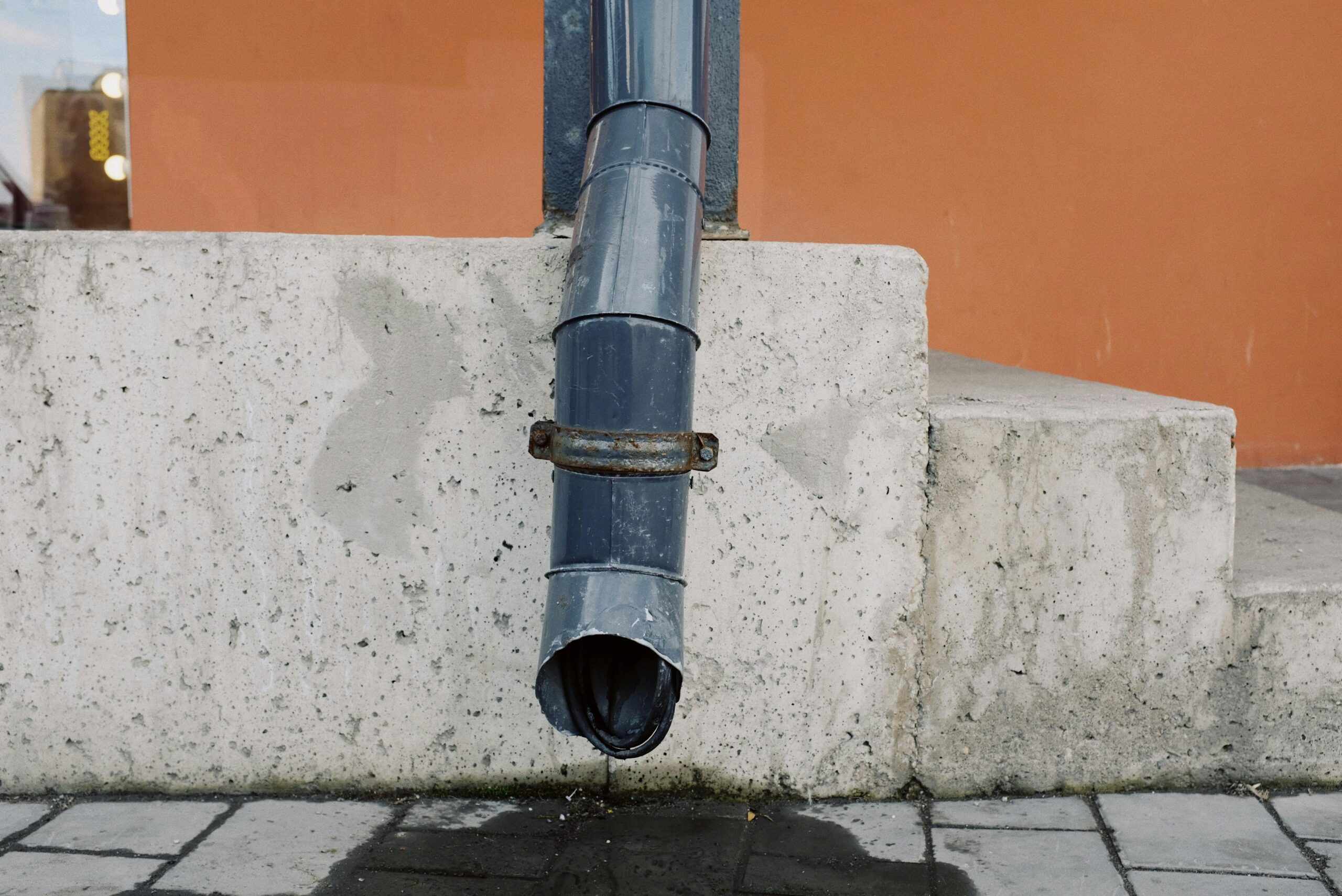
Some commercial buildings use perimeter gutters and downspouts, particularly on metal roofing or sloped commercial roofs. These systems help:
- Control water flow at roof edges
- Prevent runoff from damaging walls or foundations
- Direct water safely away from pedestrian areas
Proper sizing and placement are essential for handling Atlanta’s heavy rainfall.
Ponding Water and Its Impact on Commercial Roofs
Ponding water occurs when water remains on the roof surface for extended periods after rainfall. This is one of the most damaging conditions for commercial roofing systems. Ponding water can:
- Weaken roofing membranes
- Increase the risk of leaks
- Reduce insulation performance
- Void manufacturer warranties
Roofing systems such as TPO roofing and roof coatings, including silicone roof coating, are designed to handle moisture—but they still rely on proper drainage to perform as intended.
How Drainage Affects Roof Longevity
A roof with effective drainage experiences far less stress over time. When water drains quickly and completely, roofing materials are exposed to fewer damaging conditions. Good drainage helps:
- Reduce thermal and moisture-related expansion
- Minimize membrane breakdown
- Protect seams, flashing, and penetrations
- Extend overall roof lifespan
In contrast, roofs with poor drainage often require frequent roof repairs or premature replacement.
Drainage and Atlanta’s Heavy Rainfall
Atlanta receives significant rainfall throughout the year, often in intense bursts. Commercial roofs must be designed to handle these conditions without allowing water to accumulate. Key challenges include:
- Sudden high-volume rain events
- Debris from trees clogging drains
- Overflow risk during storms
Commercial Roofing Atlanta projects must account for these realities during design and installation.
The Role of Drainage in Roof Coating Systems
Roof coatings are an effective way to restore and protect commercial roofs, but drainage remains critical even with coatings in place. Silicone roof coating systems are highly resistant to standing water, making them a popular choice for flat roofs. However, coatings are not a substitute for proper drainage.
Drainage systems must still:
- Move water efficiently
- Prevent long-term ponding
- Support coating performance and longevity
A professional commercial roofing contractor will always address drainage issues before applying roof coatings.
Drainage Design and Roof Slope
Even flat roofs are not truly flat. They are designed with subtle slopes that guide water toward drains or scuppers. If slope is inadequate or compromised, drainage problems can develop. Drainage-related design issues may include:
- Settling of the building structure
- Improper original roof installation
- Deteriorated insulation causing low spots
Correcting slope and drainage pathways is often part of comprehensive roof repairs or restoration projects.
Maintenance Is Essential for Drainage Performance
Even well-designed drainage systems can fail if they are not maintained. Leaves, dirt, and debris can quickly block drains and scuppers—especially in Atlanta’s tree-heavy environment. Routine maintenance should include:
- Clearing debris from drains and gutters
- Inspecting scuppers and downspouts
- Checking for signs of ponding
- Verifying drain strainers are secure
Regular inspections are one of the most effective ways to prevent drainage-related roof damage.
Drainage Issues and Emergency Roof Repairs
Many emergency roof leaks are caused by drainage failures rather than membrane defects. Blocked drains can cause water to back up and enter the building through seams, penetrations, or flashing. Prompt attention to drainage problems can:
- Prevent interior water damage
- Reduce business disruption
- Avoid emergency roof repairs
Addressing drainage proactively is far less costly than responding to sudden failures.
Drainage and Roof Replacement Decisions
Drainage problems often influence whether a roof should be repaired, restored, or replaced. In some cases, improving drainage allows a roof to be restored with coatings instead of replaced. A professional evaluation considers:
- Existing drainage effectiveness
- Roof condition and age
- Suitability for coatings or membrane replacement
This approach ensures the most cost-effective and durable solution.
Coordinating Roofing and Exterior Surfaces
Drainage doesn’t stop at the roof edge. Water leaving the roof must be directed safely away from the building and surrounding surfaces. Many commercial properties coordinate roofing with:
- Asphalt paving
- Parking lot repairs
- Parking lot sealcoating
- Asphalt sealcoating
Proper coordination improves drainage flow, reduces erosion, and protects both the roof and the property.
Choosing the Right Commercial Roofing Contractor
Because drainage is such a critical part of commercial roofing, experience matters. A qualified commercial roofer understands how drainage, roofing materials, and Atlanta’s climate interact. Look for a contractor experienced in:
- Commercial roofing systems
- TPO roofing and metal roofing
- Roof coatings and restoration
- Drainage design and correction
Proper installation and maintenance are essential for long-term drainage performance.
Protecting Your Roof With the Right Drainage Strategy
Drainage systems are one of the most important—and often overlooked—elements of commercial roofing. Without proper drainage, even high-quality roofing materials can fail prematurely. For commercial properties in Atlanta, effective drainage protects:
- Roofing systems
- Building interiors
- Structural components
- Long-term operating costs
Contact Advanced Roofing & Paving for Commercial Roof Drainage Solutions
If you’re experiencing ponding water, frequent leaks, or concerns about your commercial roof’s drainage performance, professional evaluation is essential. Addressing drainage issues early helps prevent major damage and extends roof life.
Contact Advanced Roofing & Paving today to schedule a commercial roof inspection. Our team provides expert Commercial Roofing Atlanta services, including drainage assessment, TPO roofing, metal roofing, roof coatings, silicone roof coating systems, and reliable roof repairs. Let us help you protect your building with a drainage system designed for Atlanta’s demanding weather.